


Process stability through PLA measurement solutions
Instrumentation plays a central role in stabilizing PLA production. PLA measurement solutions enable continuous quality monitoring, providing early visibility into process stability and product consistency. Maintaining stable operating conditions across fermentation, purification and polymerization is essential to achieve consistent PLA properties and reliable plant performance.
Continuous measurement of flow, pH, pressure, level and composition allows operators to detect deviations early, sustain biological activity and protect downstream unit operations from variable feed quality. With real-time process insights, plants can reduce variability, improve batch-to-batch repeatability, limit off spec material and support more energy-efficient batch processing across the PLA value chain.

Fermentation/bioreactor
Optimize fermentation stability with reliable feed control
Precise feed control is essential in lactic acid fermentation, as fluctuations in substrate availability or feed conditions directly affect microbial metabolism and acid productivity.
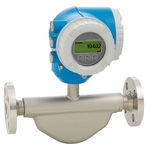
- Stabilize substrate availability to protect fermentation performance: Promass E 300 provides Coriolis mass flow measurement independent of density or viscosity changes, supporting stable stoichiometric control of fermentation feeds
- Detect raw material variability before it impacts the bioreactor: Promass F 300 delivers high‑accuracy inline density measurement, enabling early detection of feedstock variability and stable fermentation conditions
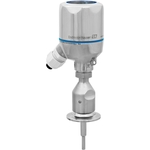
- Control feed temperature to avoid metabolic stress: iTHERM TM131 with fast response time supports stable feed pre‑conditioning even during load or composition changes


Fermentation/bioreactor
Maintain biological performance with stable fermentation conditions
Lactic acid fermentation requires tight control of biological and gas handling parameters to sustain productivity throughout the batch or continuous operation.
- Track nutrient and metabolite concentrations directly in the fermenter: In line Raman Rxn4 analyzer measures multiple critical process parameters to ensure optimal yield and batch-to-batch consistency
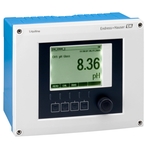
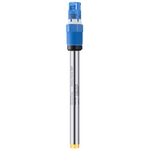
- Control pH to protect microbial activity: Memosens CPS11E combined with Liquiline CM448 delivers stable, drift‑free inline pH measurement suitable for biological media
- Track biomass development to detect declining fermentation performance early: OUSAF11 supports continuous turbidity monitoring, while Liquiline CM44P enables integration of spectroscopic concentration data for fermentation trending
- Maintain stable working volume and prevent foam‑related disturbances: Micropilot FMR62B, supported by Heartbeat Technology for predictive maintenance, ensures reliable level measurement in bioreactors
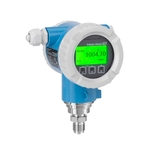
- Stabilize gas release to protect fermentation operation: Cerabar PMP51B provides reliable pressure monitoring in fermentation vessels and off‑gas lines
- Monitor CO₂ evolution to validate fermentation progression: MCS300P enables continuous off‑gas CO₂ monitoring to support early detection of fermentation deviations


Distillation
Stabilize downstream separation with consistent broth quality
Steady purification performance depends on predictable fermentation broth composition and controlled transfer conditions.
- Detect ionic impurities early to protect separation performance: Memosens CLS82E combined with Liquiline CM442 provides reliable conductivity measurement for impurity trend detection
- Monitor broth composition to identify impurity load and incomplete fermentation: Raman Rxn4 analyzer enables real‑time monitoring of key organic components and impurity trends, supporting stable operation of downstream purification units
- Stabilize transfer flow to ensure consistent feed to purification units: Promag H 300 ensures reliable electromagnetic flow measurement for transferring fermentation broth to purification


Frequently asked questions about PLA measurement solutions
These frequently asked questions address common engineering considerations when selecting measurement technologies for PLA production. They explain why specific instrumentation approaches are well suited to fermentation, purification and polymerization processes.


